Can foreigners legally marry in Spain?
A civil marriage in Spain needs one partner domiciled there. A Catholic wedding is the exception. The rules for the Spanish Basque coast, from Donostia's town hall to the diocese.
Published Updated
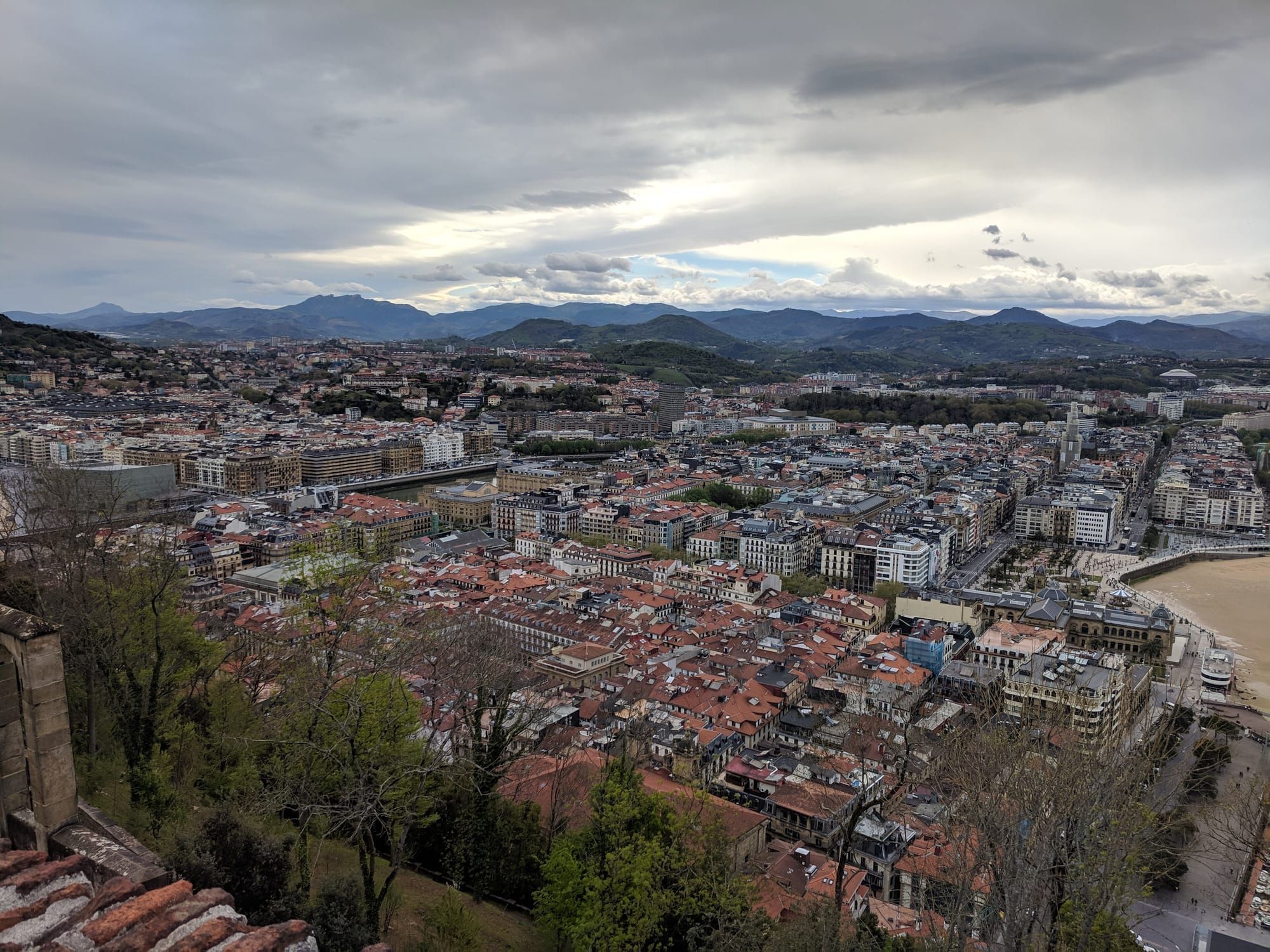
Yes, but a civil marriage in Spain needs at least one partner domiciled there. The file opens at the civil registry, notary or consulate covering a partner’s residence, so two visitors with no Spanish address have nowhere to file, and a Catholic church wedding is the main exception.
This guide is orientation. It is not legal advice. Registries, notaries and dioceses read files differently. Confirm everything with the office that will actually marry you.
Most international couples on the Spanish side do what they do on the French side. They sign at home, then hold the ceremony, vows and dinner in San Sebastián, Hondarribia or the hills behind them. The French side of the same question is in marrying on both sides of the border.
What Spanish law allows
Spain’s Civil Code lets two foreigners marry in Spain, either in the form prescribed for Spaniards or in the form set by either partner’s own national law. That sounds open.
Before any civil wedding, the couple completes a marriage file, the expediente matrimonial. The Spanish government’s citizen portal says the file is processed “at the place of residence of one of the spouses”. It goes to a civil registry officer, a court legal officer, a notary of that residence, or a Spanish consulate if a partner lives abroad. The application lists where each partner has lived for the previous two years.
So the law permits the marriage, and the procedure ties it to an address. A couple flying in from Chicago or Sydney, neither with a Spanish residence, has no competent office.
Same-sex couples are covered by the same rules. Spain opened civil marriage to same-sex couples in July 2005, the third country to do so after the Netherlands and Belgium.
The civil route on the Spanish Basque coast
If one partner does live in Spain, the civil route is workable and local. Donostia-San Sebastián’s town hall sets out the steps. One partner must be registered (empadronado) in the municipality where the file is opened. For residents of Donostia, that is the civil registry at the Palacio de Justicia de Atotxa. The registry then sends its authorisation to the town hall.
The ceremony itself is short and municipal. Donostia lists two formats in 2026:
- Ordinary, with a public act, in the council chamber (Salón de Plenos) of the town hall on Alderdi Eder. Second and third Saturdays of the month, 10:00 to 13:30. In June, July and September, the second and third Fridays from 18:00 to 20:00 are added. The fee is 100 EUR.
- Quick, without a public act, in a room assigned on the day, with a maximum of 15 people. Second and third Thursdays, 11:30 to 13:00. No reservation fee.
Weddings run every 30 minutes. The ceremony can be in Basque, Spanish or both. Rice, confetti, petals and bubbles are banned on the Alderdi Eder terrace. The application goes in no more than six months before the date.
Since a 2015 reform, notaries can also process the file and marry the couple. The notary must belong to the residence of one partner. The domicile rule does not go away.
The Catholic exception
Article 60 of the Civil Code gives a marriage celebrated under canon law full civil effect. The parish certificate is then entered in the civil registry. This is the one route by which two non-resident foreigners regularly marry legally in Spain.
It comes with its own file, run by the parish and the diocese rather than the registry:
- At least one partner is normally a baptised Catholic. Neither can have a previous Catholic marriage that has not been annulled.
- Baptism certificates are usually requested no older than six months.
- A marriage preparation course, often taken at home and certified by the home parish.
- The home diocese sends the file to the Spanish diocese. For non-residents, the bishop’s permission is commonly required.
Start six months ahead, and get the papers to the church at least two months before the date. Many Spanish churches will not book more than a year out. The diocese of San Sebastián covers Gipuzkoa, including Hondarribia’s church of Santa María de la Asunción y del Manzano inside the walls.
Other religious rites can carry civil effect in Spain too. They need the civil marriage file first, so the domicile rule applies again.
Documents and timing
For a civil file, expect the same backbone as in France, with Spanish details:
- A full, recent birth certificate.
- Proof of single status, or a divorce or death certificate for a previous marriage.
- A residence history covering the last two years.
- For foreign documents, an apostille and a sworn translation into Spanish.
- Two adult witnesses with ID on the day.
Spanish registries usually want documents issued within the previous three months. Once the file is approved, the certificate of capacity to marry is valid for six months. The partners are interviewed, separately, before the file is approved. The interview exists to screen out marriages of convenience. Answer plainly.
Appointment times are the real constraint. Donostia offers ordinary ceremonies on only two Saturdays a month, in 30-minute slots. Budget the whole process at four to six months.
Marry at home, celebrate here
The clean path for most visiting couples is the same on both sides of the Bidasoa. Sign the legal marriage at home: a registry office, two witnesses, a quiet first celebration. Then hold the wedding here, with a celebrant, your own vows and as many guests as the venue takes.
A symbolic ceremony has no registry timetable. It can be on a hotel terrace above the Concha, in a farmhouse above Hondarribia, or on the lawn of an estate in the hills. The only calendar that matters is the venue’s. The venue choice is in Biarritz vs San Sebastián, and the budget is in what a Basque coast wedding costs.
A marriage validly concluded in your home country is recognised in Spain and across the EU. If you marry in Spain instead, check how your own country records a foreign marriage before you book.
If one of you is Spanish
The picture changes. A Spanish partner living in Spain files at the local registry or with a local notary. A Spanish partner living abroad files through the Spanish consulate for their district. Either way, the domicile rule is met, and a civil wedding at Donostia or Hondarribia town hall becomes a real option.
When you write to us, say your nationalities, where each of you lives, and whether a legal marriage at home is already done.
Sources
- Spanish Ministry of Justice, marriage file and citizen portal, checked 2026.
- Donostia-San Sebastián town hall, ceremony formats cited for 2026.
Questions we are asked
Can foreigners get legally married in Spain?
Yes, but a civil marriage needs at least one partner domiciled in Spain, because the file opens at the civil registry, notary or consulate of a partner's residence. Two visitors with no Spanish address have no office to file with. A Catholic church wedding is the main exception.
Can two tourists have a civil wedding in San Sebastián?
In practice, no. Donostia's town hall asks that one partner be registered as a resident (empadronado) in the municipality where the file is opened, and the registry sends its authorisation to the town hall before the date. Without that, there is nothing to authorise.
Is a Catholic wedding in Spain legally binding for foreigners?
Yes. Article 60 of the Spanish Civil Code gives a canonical marriage civil effects, and the parish certificate is then entered in the civil registry. At least one partner is normally Catholic, and the diocese processes the file, which for non-residents usually needs the bishop's permission.
How long does the Spanish marriage file take?
Allow several months. The application lists where each partner lived for the previous two years, documents must usually be under three to six months old, and the resulting certificate of capacity is valid for six months. Start six months out at the latest.
Can same-sex couples marry in Spain?
Yes. Spain opened civil marriage to same-sex couples in July 2005. The domicile rule applies in the same way, so two non-resident partners still cannot marry at a Spanish town hall.
Testimonials
If this sounds like your wedding
Send the outline. We read every note and reply within 24 hours.
Thank you. We have the note.
Expect a reply within 24 hours, usually with a few clarifying questions and a first shortlist. If you do not see it, check spam or write to hello@basquecoastweddings.com.